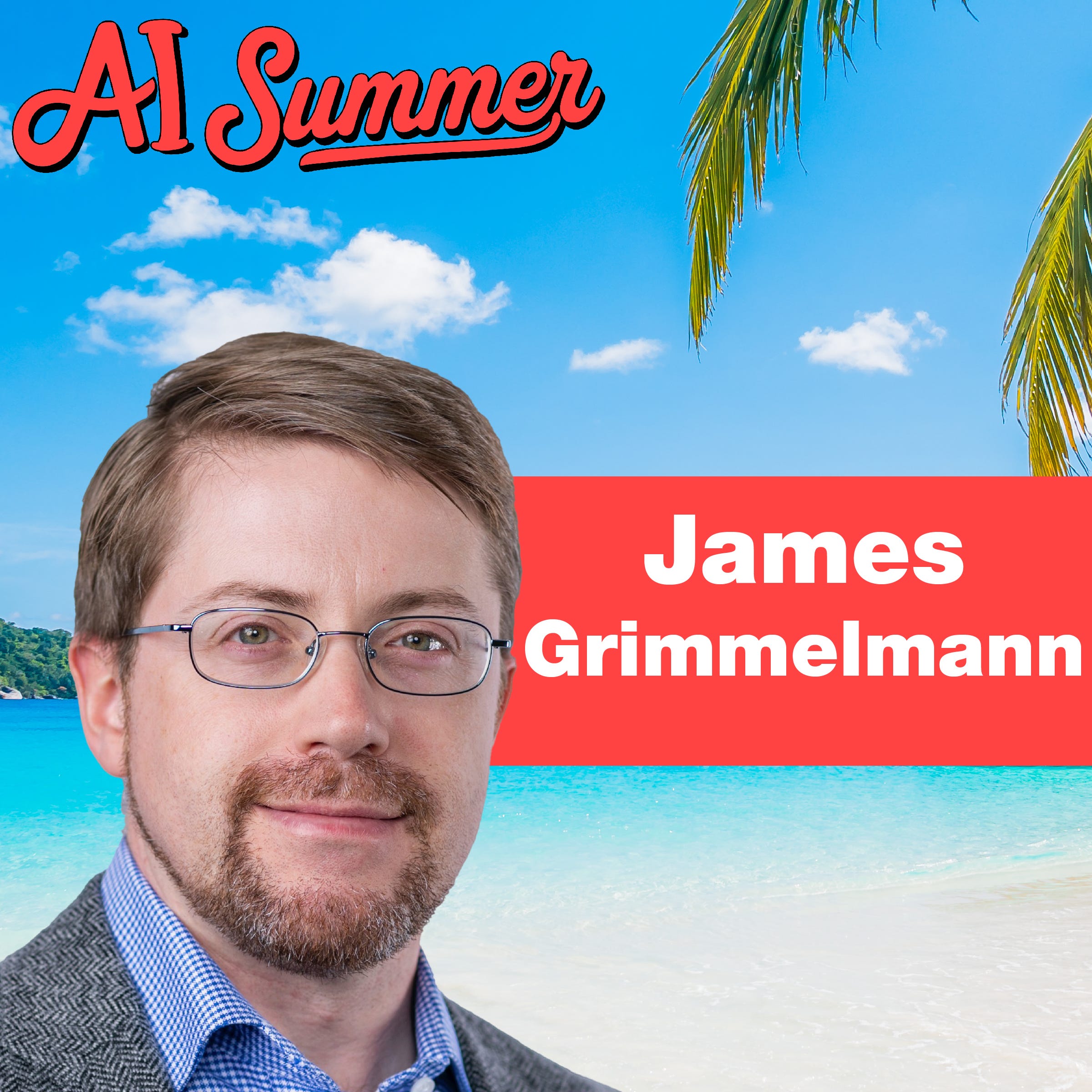


I’m organizing a happy hour on June 23 for listeners of AI Summer and readers of my newsletter, Understanding AI. It’ll run from 5:30 to 8:00pm at The Crown & Crow in Washington DC. I will be there, along with past guests Kai Williams and Andy Masley, and friend of the show Abi Olvera. If you are planning to come, or thinking about it, I’d appreciate it if you could fill out this form to let me know. That way I can give The Crown and Crow some warning about the size of the crowd. Hope to see you there!
Cornell law professor James Grimmelmann returns to the show to explore how AI is reshaping software copyright from multiple angles.
We start with a fascinating case study: an open-source developer who used an AI coding agent to reimplement a GPL-licensed library from scratch, allowing him to relicense the result under a more permissive license. The move mimics a classic “clean room” reimplementation—where one team writes a spec and a quarantined second team writes new code—but with an AI playing the role of the second team. Grimmelmann explains why this shortcut is legally shaky, especially since the AI model itself was likely trained on the original code. But if the technique holds up, it could undermine the entire open-source ecosystem: any company could use an AI agent to strip away the licensing conditions that keep open-source software free.
We also dig into whether AI-generated code is copyrightable at all, tracing the question back to the monkey selfie case and the low “modicum of creativity” threshold courts apply.
Finally, Grimmelmann provides an update on the major AI training lawsuits. Courts seem to believe that training itself is fair use. But Anthropic still agreed to pay $1.5 billion to settle claims over pirated training data. Meanwhile, new research showing models can reproduce near-complete copies of books is complicating the defendants’ story. If AI models keep memorizing copyrighted works, will companies be able to argue that training is truly “transformative”?